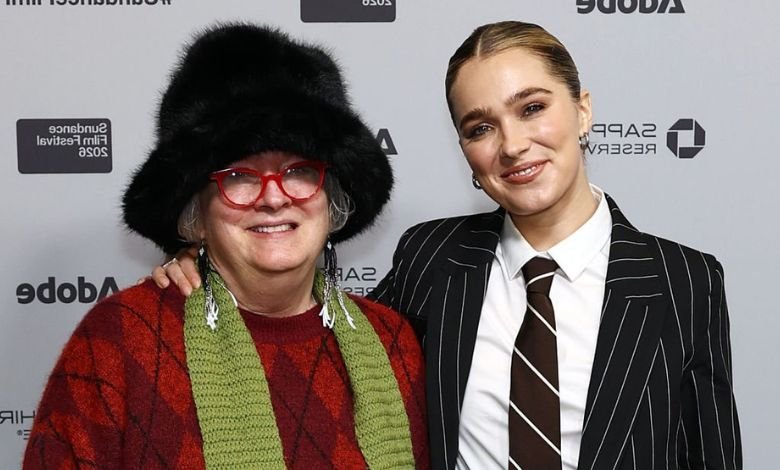
Valerie M. Richardson is the mother of actress Haley Lu Richardson and a design professional whose career includes graphic design, business operations, and professional leadership. Her family connection brings her to the attention of film and television audiences, while her working life has its own history in Arizona’s creative community.
Valerie’s biography also intersects with two different creative careers: her husband Forrest Richardson’s work in golf course architecture and her daughter’s move into acting. Accounts from both describe occasions when she participated directly in important professional decisions.
Her story can be traced through design-industry records, a professional biography, and interviews with her family. Together, these sources provide a grounded account of her work, her family relationships, and the practical part she played in Haley’s early years in Los Angeles.
Table of Contents
Valerie M. Richardson Profile Summary
| Field | Details |
|---|---|
| Name | Valerie M. Richardson |
| Professional name used in design records | Valerie Richardson |
| Daughter | Haley Lu Richardson |
| Husband | Forrest Richardson |
| Professional background | Graphic design and business operations |
| Firm role | Operations Director at Forrest Richardson Golf Course Architects |
| Previous design partnership | Richardson or Richardson |
| Professional leadership | AIGA chapter president, 1991–1992 |
| Family and professional connection | Phoenix, Arizona |
Valerie M. Richardson’s Family and Marriage
Valerie and Forrest Richardson are the parents of Haley Lu Richardson. The American Society of Golf Course Architects identifies the couple and their daughter in its account of Forrest’s appointment as the organization’s president in 2020. Haley has also described herself as an only child in interviews.
Forrest’s career involves planning and designing golf courses. His professional assignments have included new courses, renovations, and projects that reconsider how existing golf properties can be used. The society’s account identifies him as a designer whose practice developed through a long association with architect Arthur Jack Snyder.
That professional background helps explain the family’s connection to design, but Valerie and Forrest also worked together directly. Their relationship included a business partnership, with each contributing to a practice that combined visual communication and, eventually, golf-related work.
The family’s history therefore extends beyond its connection to entertainment. Before Haley established an acting career, her parents had already built working lives around creative projects, clients, and the challenges of running a business.
Valerie M. Richardson and the Richardson or Richardson Design Partnership
Valerie and Forrest worked as creative directors of Richardson or Richardson, a Phoenix design business. Their partnership is discussed in the industry book Inside the Business of Graphic Design: 60 Leaders Share Their Secrets of Success, which presents their experience as a case study in changing a professional arrangement.
The book describes a couple who had spent about twenty years working together when Forrest’s growing commitment to golf course architecture required them to reconsider the business. The central question was how to accommodate two increasingly distinct practices: graphic design and golf course design.
For Valerie, the change involved reassessing how the graphic design side would operate with one partner taking a different professional direction. The account describes a period of adjustment rather than a simple, immediate switch from one business model to another.
This episode gives her career an entrepreneurial dimension. Her working history includes the practical decisions involved in maintaining a design practice while a shared business evolves. It also places her professional experience within the ordinary realities of creative work: responsibilities, changing interests, and the need to reorganize.
Also Read: Lily Radford Biography: Karen Grassle’s Daughter and Family
Valerie M. Richardson’s Work on Golf Graphics
An early example of Valerie’s professional work appears in a May 1992 Golf Course News article about Richardson or Richardson. The report discusses a graphics package for golf facilities at Disney World and identifies Valerie as the graphics specialist within the partnership.
The project covered several parts of the visitor experience, including entry-road signs, clubhouse signs, tee signs, cart-path directions, yardage markers, flags, and a logo. These were functional materials that golfers would encounter while navigating and using the facilities.
A Disney Development Company representative praised the package for meeting requirements for durability, readability, function, and a distinctive appearance. That contemporary assessment provides a specific example of how the partnership’s work was received by a client.
The assignment also illustrates the connection between graphic design and physical surroundings. A golf course needs more than a layout of holes: people must find their way, identify locations, and understand directions. Valerie’s work contributed to that communication layer, bringing visual design into a recreational setting.
Valerie M. Richardson’s Professional Leadership in Arizona
AIGA Arizona lists Valerie Richardson among its past presidents, with her term recorded as 1991–1992. This dated organizational record establishes a leadership role in the local design community well before her daughter entered the entertainment industry.
AIGA is a professional association connected with design. Its Arizona chapter describes its board as a volunteer group serving the state’s creative community through programs, initiatives, and chapter business. Valerie’s inclusion in its presidential history places her within that continuing professional network.
The presidential listing is useful because it gives her biography a clear chronological reference. It connects her name to an organization and a defined period, providing a firmer basis for discussing professional leadership than broad claims about influence or reputation.
Her service also shows that her work extended beyond individual client assignments. Alongside the commercial responsibilities of a design practice, she participated in the organized professional life of Arizona’s design community.
Valerie M. Richardson’s Career in Operations and Design
Forrest Richardson Golf Course Architects identifies Valerie as Operations Director, responsible for strategic operations, client communications, speaking appearances, and special projects. Her earlier experience includes market research, finance, education, and graphic design.
Her golf-development work has included thematic and signage programs, with Disney, Hilton, and Del Webb among the clients named in her professional biography.
That account states that her design work appeared in CA Magazine, Graphis, and Graphic Design USA, and that her posters are in the U.S. Library of Congress’s permanent collection. It also records speaking engagements and service on Phoenix’s South Mountain Park Advisory and Planning Commission.
Valerie M. Richardson’s Role in Forrest Richardson’s Career
Forrest described Valerie’s involvement in his return to golf design in a 2004 interview with Golf Club Atlas. He recalled that she discovered papers relating to his earlier interest in golf course architecture and encouraged him to teach her the game.
The couple began traveling and playing golf. They also developed a small business making scale models of courses for clubs and resorts. According to Forrest, the activity helped support their travel and introduced them to people within the golf world.
One model-making assignment concerned the Pointe at South Mountain Resort in Phoenix. Forrest explained that the project lacked detailed golf course plans, so he developed a design from the rough routing available and incorporated it into the model.
His account places Valerie within an early stage of that professional transition. She was involved in the model-making business and the shared activities through which his interest developed into further opportunities. The interview gives a concrete example of their personal and professional lives overlapping.
Valerie M. Richardson and Haley’s Creative Childhood
Haley grew up in Phoenix and has described a household where creative interests were taken seriously. In an interview with Under the Radar, she connected her own enthusiasm for making things with her parents’ creative occupations and their interest in stimulating work.
The same interview includes a family story about her first name. Haley said her parents met a young girl named Haley while traveling by train through the Grand Canyon. They liked the child and decided that, if they had a daughter, they would use the name.
Haley presented this as a story her parents had told her. It is a personal recollection about the family’s choice of a name, rather than an account of a professional milestone or a carefully planned connection to entertainment.
These details give some texture to the home in which she grew up. They describe creative interests and family memories without requiring assumptions about Valerie’s own childhood, education, or ambitions.
Valerie M. Richardson’s Influence Through Crochet
One of the clearest examples of a skill Valerie passed to her daughter is crochet. Haley told Verge that her mother taught her when she was eight. She later made hats, beanies, and scarves, and described selling her handmade pieces through Etsy.
In a separate interview about The Edge of Seventeen, Haley explained that she continued developing patterns and designs. She also pointed out that one of her crocheted tops appeared briefly in the film, connecting a personal craft with her screen work.
Haley described crochet as an activity she could enjoy without the pressure associated with performing. That distinction gives the childhood lesson lasting significance: it became a creative outlet she could return to alongside the demands of acting.
The account provides a specific, observable example of influence between mother and daughter. Valerie taught a practical skill, and Haley continued using and adapting it over time. There is no need to infer a broader teaching philosophy to recognize that connection.
Valerie M. Richardson and the Decision to Move to Los Angeles
Haley’s interest in professional performance developed after years of dance training. In a 2022 conversation with Aubrey Plaza for Interview magazine, she described dancing throughout her childhood and adolescence, with classes and practice taking up substantial time.
She also recalled winning a national dance competition that brought an opportunity for representation by a Los Angeles dance agency. That development helped turn the possibility of moving into something she wanted to explore seriously.
Her parents’ agreement followed a presentation. In an earlier Interview magazine conversation, Haley described preparing a three-panel display that considered the advantages, disadvantages, and practical questions involved. Money, housing, and school were among the matters that needed answers.
Valerie then moved to Los Angeles with her daughter. The sequence matters: Haley expressed an ambition, worked through the logistics, and obtained parental support. The move was a family decision involving practical arrangements at a time when she was still a teenager.
Valerie M. Richardson’s Support During Early Auditions
An Imagista interview provides a detailed example of Valerie’s day-to-day involvement during the early Los Angeles period. Haley recalled submitting herself for an independent film role online while she was still younger than seventeen.
Valerie drove her to the audition. Haley remembered being uncertain about the opportunity because she did not yet know the people involved, but she was interested in the script. After further meetings, the audition led to an early leading film role.
In the same interview, Haley identified her parents as her strongest supporters. She explained that they took her ambitions seriously while expecting her to work out how the move and career attempt could function.
This account describes support through a particular action: a mother transporting her teenage daughter to an audition during the beginning of a new career. It helps explain what parental involvement meant in practice, beyond encouragement expressed in general terms.
Valerie M. Richardson and Haley’s Transition to Independence
The Los Angeles arrangement was temporary. In her conversation with Aubrey Plaza, Haley said her mother stayed with her for roughly a year and a half and returned to Arizona just after Haley turned eighteen.
A 2016 Ladygunn interview describes the transition that followed. Haley had completed high school online and remained in Los Angeles after her mother’s departure. She then had to take greater responsibility for auditions, punctuality, and continuing to work when the process became difficult.
Her later discussion with Teen Vogue also addressed the cost of the decision. Haley reflected on giving up a conventional senior year and using resources that had been intended for college. Those comments show that pursuing acting involved choices with consequences for education and family finances.
The transition marks a distinct stage in Valerie’s role. Living alongside her daughter during the initial move was followed by a period in which Haley managed more of her daily life herself. Continued family support and physical independence could exist together.
Valerie M. Richardson’s Daughter and Her Acting Career
Haley’s screen career provides context for readers searching for her mother. Her work includes The Edge of Seventeen, Split, Columbus, Five Feet Apart, and the second season of The White Lotus. These projects span teenage drama, suspense, independent film, romance, and television. en.wikipedia.org
In The White Lotus, she played Portia, the assistant to Jennifer Coolidge’s character Tanya. The role placed her within an ensemble story about guests and employees at a luxury resort, adding a prominent television performance to her film work.
She also starred alongside Owen Teague in Montana Story, directed by Scott McGehee and David Siegel. The film follows estranged siblings returning to a family ranch and confronting a difficult shared history.
These credits belong to Haley’s professional record. They explain the entertainment connection that leads audiences to Valerie, while the accounts of design work, business partnership, and professional service establish her mother’s own career history.
FAQs About Valerie M. Richardson
Who is Valerie M. Richardson?
Valerie M. Richardson is Haley Lu Richardson’s mother. Her professional background includes graphic design, design-industry leadership, and business operations.
Who is Valerie M. Richardson’s husband?
Her husband is golf course architect Forrest Richardson. The couple also worked together in the Phoenix design business Richardson or Richardson.
What does Valerie M. Richardson do?
Forrest Richardson Golf Course Architects lists her as Operations Director, with responsibilities involving strategic operations, communications, and special projects.
Did Valerie M. Richardson move to Los Angeles with Haley?
Yes. Haley has described moving with her mother at sixteen and living with her there for approximately a year and a half.
Did Valerie M. Richardson teach Haley to crochet?
Yes. Haley has said that her mother taught her at eight. She continued making her own designs and later sold handmade accessories.




One Comment