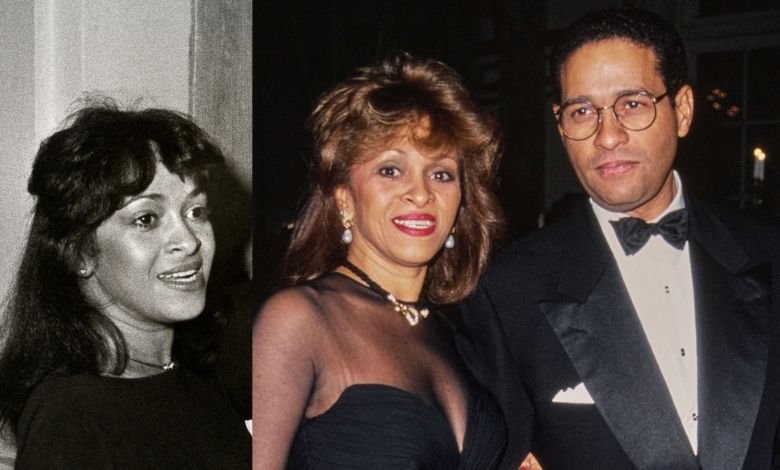
June Baranco is an American artist and milliner whose biography brings together family life, fine art, and handmade fashion. She was married to television journalist Bryant Gumbel from 1973 to 2001, and they have two children: Bradley Christopher Gumbel and Jillian Beth Gumbel.
Her marriage connects her to a prominent figure in American broadcasting, but her creative work provides another substantial part of her story. Working professionally under the name June Gumbel, she has developed hats and headpieces through Geaux Chapeaux Millinery. Her background also includes formal art education and experience with several visual media.
An account of her life therefore needs to consider both family history and professional activity. Her years with Bryant establish an important chronology, while her work as a designer explains the skills and interests she developed independently. Museum exhibition material has also brought attention to her millinery in its own right.
Table of Contents
June Baranco Profile Summary
| Field | Details |
|---|---|
| Name | June Baranco |
| Professional name | June Gumbel |
| Occupations | Artist and milliner |
| Childhood hometown | Baton Rouge, Louisiana |
| Education | Fine arts degree from Louisiana State University |
| Graduation year | 1971 |
| Former spouse | Bryant Gumbel |
| Marriage | December 1, 1973–2001 |
| Children | Bradley Christopher Gumbel and Jillian Beth Gumbel |
| Design business | Geaux Chapeaux Millinery |
June Baranco’s Early Life in Baton Rouge
June Baranco grew up in Baton Rouge, Louisiana. Her childhood included practical experience with sewing, which later became relevant to her work in fashion accessories. In a 2014 interview with The Advocate, she recalled learning hand sewing from her aunt Eura, a seamstress, when she was around eight or nine.
Her parents, Jeannie and Joseph Baranco, gave her a sewing machine for her tenth birthday. She still had the machine when she discussed her childhood in that interview. The gift provides a specific connection between the skills she learned as a child and the work she pursued much later.
Hats were also familiar objects during her upbringing. She remembered wearing them regularly and developed an interest in collecting older examples. Her eventual move into hatmaking grew from this long familiarity with headwear, rather than from an entirely new interest encountered in adulthood.
June Baranco’s Education and Early Employment
Baranco studied at Louisiana State University and completed her fine arts degree in 1971. Her professional biography identifies painting and drawing as her areas of study. This education established an artistic foundation before the marriage that would later bring her name into entertainment and television coverage.
A 1997 biographical account of Bryant Gumbel places June at LSU when the couple met in 1968. She was visiting a friend in Chicago at the time. That account also identifies her subsequent employment as a Delta flight attendant, adding an early professional role outside her later art and design work.
These dates help distinguish the different stages of her early adulthood. Her relationship with Bryant began during her student years, her graduation followed in 1971, and their wedding took place in 1973. Her education and employment belong within that chronology as parts of her own background.
June Baranco’s Marriage to Bryant Gumbel
June Baranco and Bryant Gumbel married on December 1, 1973. Their marriage began while Bryant was building his television career, before his long tenure as a host of NBC’s Today. Over the following decades, his broadcasting work made the Gumbel name familiar to a national audience. Wikipedia
Bryant’s career developed from sports journalism into network news and interviewing. He worked at KNBC in Los Angeles during the 1970s and joined Today as a host in 1982. His years on the morning program continued until 1997, covering a substantial portion of the marriage.
This professional timeline explains the television context surrounding the family. It does not establish June’s responsibilities within Bryant’s career, and those responsibilities should not be assumed. The clear biographical facts are that their marriage preceded his Today appointment and continued through his years on the program.
June Baranco’s Children and Family Life
June and Bryant have two children together: their son, Bradley Christopher Gumbel, and their daughter, Jillian Beth Gumbel. Both belong at the center of the family history, rather than appearing only as brief details within an account of their parents’ marriage.
Contemporary accounts described the family living in the New York area. A 1997 biographical profile mentioned a New York City apartment and a home in Westchester, where June maintained an art studio. This places her creative practice within the years when she was raising a family.
Jillian later became part of the origin story of June’s millinery work. Preparations for her daughter’s 2011 wedding led June to look closely at bridal headwear and consider making her own. The episode provides a concrete link between her family life and a later professional venture.
The children’s place in this biography can be explained without assigning them occupations, personalities, or personal experiences that the evidence does not establish. Their relationship to June and Bryant, and Jillian’s connection to the hatmaking story, are the relevant details.
June Baranco’s Divorce in 2001
June Baranco and Bryant Gumbel divorced in 2001, ending a marriage that had lasted more than 27 years. Contemporary coverage placed the conclusion of the proceedings in August, in a Westchester County courtroom in New York.
The financial agreement was sealed. That matters when considering accounts of the divorce: the existence of a settlement does not make every claimed detail of its terms an established fact. Estimates of assets or payments should not be treated as an account of June’s later finances.
Her attorney, Barry Slotnick, told the Associated Press that she was satisfied the proceedings had ended and could move forward. His statement gives a contemporaneous account of her response through her legal representative. It does not provide a basis for broader claims about her private feelings or subsequent relationships.
The divorce is an important milestone in the biography, but it is one event within a longer life. Her education preceded the marriage, her art practice continued during it, and her later design work supplies a separate professional chronology.
June Baranco’s Work as a Fine Artist
June’s professional biography describes a practice extending across oils, pastels, drawing, printmaking, pottery, stained glass, and clothing design. It also records exhibitions of her work in New York, California, Connecticut, Louisiana, and Great Britain.
The same biography lists connections with art organizations, including the Salmagundi Club and the Katonah Museum Artist Association. These affiliations are best understood as details recorded in her professional profile, rather than as a statement that she currently holds every role it mentions.
Her range of media is relevant to understanding the direction of her career. Painting involves decisions about color and composition; work with clothing and three-dimensional objects adds questions of material, structure, and construction. Those are also useful considerations when examining handmade headwear.
Her artistic background therefore gives context to the objects she later designed. Describing a hat involves more than identifying its decorations: its shape, proportions, surface, and placement all contribute to the finished piece. This is the practical connection between her fine art training and millinery.
June Baranco and the Development of Geaux Chapeaux
Geaux Chapeaux is the millinery studio associated with June’s handmade hats, headpieces, and bridal accessories. Its professional description places the business in Westchester County, New York, and identifies June Gumbel as its artist and designer.
The studio’s name refers to her Louisiana background. “Geaux” is pronounced like “go,” while “chapeaux” is the French plural for hats. The choice connects the business identity with the regional influences described in her account of growing up.
Her move into designing headwear began in 2011 after visiting a New York bridal salon with her daughter. Dissatisfied with the available designs, she began developing her own. Smithsonian Gardens also identifies 2011 as the starting point of this part of her career.
Millinery combines design with a practical requirement: the object must work when worn. A headpiece may look balanced on a stand but require a different arrangement to sit comfortably on a person. This relationship between appearance and function helps explain the technical demands of the field.
June Baranco’s Materials and Approach to Hatmaking
Smithsonian Gardens describes June’s use of fabrics, feathers, and artificial flowers in individually designed hats. Some of her pieces incorporate orchids, linking her work to a flower with distinctive forms and a long presence in decorative design.
The exhibition account presents her headwear as a means of personal expression for the wearer. This gives a useful explanation of her design purpose: the object is intended to contribute to how someone presents herself, as well as serving as an accessory.
Vintage headwear also offered June a way to study construction. She described taking older hats apart to understand how they were assembled. Examining an existing object in this way turns a collection into a practical source of knowledge about materials and making.
For a milliner, construction affects the visible result. Supporting materials determine whether a form holds its shape, while the placement of a decorative element changes its outline. Understanding these decisions helps a reader see the craft involved without relying on promotional claims about quality or originality.
June Baranco’s Louisiana Presentation in 2014
A significant early presentation of June’s millinery took place in connection with Tea, Fashion & Fancies at the LSU Rural Life Museum in February 2014. The event also involved the Friends of the LSU Textile & Costume Museum and supported both museums.
The occasion brought her designs back to the city where she grew up and to an institution connected with her education. It also provided the setting for The Advocate’s interview about her developing business and the childhood experiences behind it.
At that stage, June described hatmaking as her main professional focus while continuing to paint in pastels and oils. This establishes a shift in emphasis rather than an abandonment of fine art. Her design work had become more central, while painting remained part of her practice.
The museum setting was relevant to the work being presented. Clothing and accessories can be examined as designed objects, with histories expressed through their materials and construction. A presentation involving a textile and costume museum placed her hats within that broader discussion of dress.
June Baranco’s Millinery Recognition and Smithsonian Exhibition
Specialist fashion coverage provides another marker in June’s professional record. Her studio documented a feature in the June 2022 issue of HATalk, a publication focused on hatmaking. This places attention to her work within the millinery field itself.
A later institutional milestone came in 2026. The Smithsonian announced that a leather hat by June Gumbel would be included in More than a Flower: The Connective Power of Orchids at the National Museum of African American History and Culture.
The exhibition opened on January 30, 2026, and marked the 30th annual orchid exhibition organized through the collaboration between Smithsonian Gardens and the United States Botanic Garden. Its approach connected plants with people, cultural history, and artistic expression.
June’s inclusion concerned her work as a milliner. The announcement placed the hat within a discussion of African American contributions to craft and design, giving the object a context beyond fashion retail or coverage of a television family.
The museum’s online presentation identifies a work titled Belle Fleuris, dated 2025, alongside its account of June. Showing a named and dated object gives readers something more specific than a general description of her occupation: it identifies an individual design within her body of work.
An exhibition appearance should also be described precisely. It establishes that her work formed part of that presentation; it does not by itself establish a permanent museum acquisition or a competitive award. The documented achievement is the inclusion of her millinery in the exhibition.
Frequently Asked Questions About June Baranco
Who is June Baranco?
June Baranco is an American artist and milliner who was married to television journalist Bryant Gumbel. Her professional work includes fine art and handmade headwear associated with Geaux Chapeaux.
When did June Baranco marry Bryant Gumbel?
June and Bryant married on December 1, 1973. Their marriage began before Bryant’s tenure as a host of NBC’s Today, which started in 1982.
When did June Baranco and Bryant Gumbel divorce?
Their divorce concluded in August 2001. The marriage lasted more than 27 years, and the financial agreement reached at its conclusion was sealed.
Who are June Baranco’s children?
Her children with Bryant Gumbel are Bradley Christopher Gumbel and Jillian Beth Gumbel. Jillian’s wedding preparations later helped prompt June’s move into designing bridal headwear.
What is June Baranco known for professionally?
She has worked as a fine artist and milliner under the name June Gumbel. Her career includes Geaux Chapeaux, specialist millinery coverage, and a hat included in a 2026 Smithsonian exhibition.






One Comment