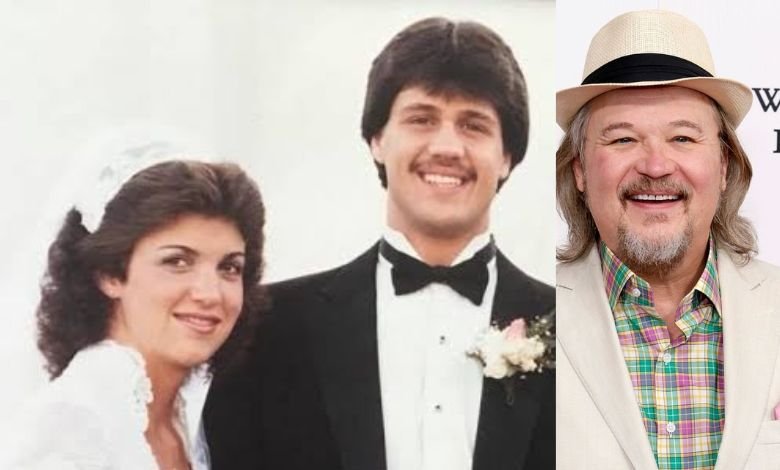
Karen Ryon was the first wife of country singer Travis Tritt and the author of Keep the Memories, Bury the Love: My Life with Travis Tritt. Their marriage dates to the early 1980s, when Tritt was still building a career in Georgia. It ended in divorce in 1984. The couple’s wedding year is less clear: biographical sources place it around 1982, while another listing gives 1983.
Ryon published her memoir in 1995 under the name Karen Tritt Ryon. By then, Tritt had released his debut album, become a member of the Grand Ole Opry, and established himself on country radio. The timing gives her biography two distinct chapters. The first concerns the years when they were together. The second begins more than a decade after their divorce, when Ryon contributed her own account to the literature about his early life.
Table of Contents
Karen Ryon Bio Table
| Field | Details |
|---|---|
| Name | Karen Ryon |
| Name credited on her memoir | Karen Tritt Ryon |
| Former spouse | Travis Tritt, country singer |
| Relationship to Travis Tritt | First wife |
| Marriage began | Early 1980s. Published accounts differ between approximately 1982 and 1983. |
| Divorce year | 1984 |
| Published memoir | Keep the Memories, Bury the Love: My Life with Travis Tritt |
| Publisher | Eggman Publishing |
| Publication year | 1995 |
Who Is Karen Ryon?
Karen Ryon appears in accounts of Travis Tritt’s life as his first wife. Their relationship belongs to the period before his major-label career, when he was working in Georgia and singing in local clubs. Most artist biographies move quickly from those early years to his breakthrough. The marriage often appears as a brief entry in a chronology, with considerably more detail available about Tritt’s performances and recordings.
The book record supplies a fuller identification. Google Books lists Karen Tritt Ryon as the author of Keep the Memories, Bury the Love: My Life with Travis Tritt. Its bibliographic entry gives Eggman Publishing as the publisher and 1995 as the year of publication. It also lists Richard Courtney as editor. The entry is useful for seeing exactly how Ryon was credited on a publication associated with her.
The two names serve different purposes in the surviving sources. Karen Ryon is the form readers often encounter in lists of Tritt’s marriages. Karen Tritt Ryon is the name to look for in book catalogs. Readers using either name are looking at the same person when the reference concerns Tritt’s first wife and the 1995 memoir.
| Profile field | Details |
|---|---|
| Name | Karen Ryon |
| Name credited on her book | Karen Tritt Ryon |
| Former spouse | Travis Tritt |
| Place in Tritt’s marriage history | First wife |
| Marriage period | Early 1980s |
| Divorce year | 1984 |
| Published work | Keep the Memories, Bury the Love: My Life with Travis Tritt |
| Publisher and year | Eggman Publishing, 1995 |
Karen Ryon and Travis Tritt’s Early Relationship
A mail-order listing in Country Music magazine in the 1990s described Ryon and Tritt as having married shortly after high school. That description points to the stage of life in which the marriage began. It appeared in promotional material for Ryon’s book, where the aim was to introduce the couple and the subject of her account to readers already familiar with Tritt’s music.
The broader chronology supports that placement. The New Georgia Encyclopedia describes Tritt as having married and divorced twice while young. Its account of the same period places him around Atlanta after high school, working during the day and appearing at bars and nightclubs as a solo performer. This is the setting in which his first marriage belongs, years before his national recording debut.
Those accounts say more about when the couple’s relationship took place than they do about Ryon’s own upbringing. Her birth date, birthplace, and educational history remain unclear in the sources that establish the marriage and the book. Even the reference to high school in the magazine advertisement gives only a general time frame. It supplies no school record or precise date when the two met.
When Did Karen Ryon Marry Travis Tritt?
The Contemporary Musicians biography hosted by Encyclopedia.com places Tritt’s first marriage around 1982 and gives 1984 as the year it ended. The approximate wording matters. A chronology that uses “around 1982” gives readers the relevant period while leaving room for uncertainty about the date. The familiar 1982–1984 range follows that account.
IMDb’s biographical listing gives September 1983 as the start of the marriage and also lists 1984 as the year of divorce. The two entries agree on the identity of Tritt’s first wife and the endpoint of their marriage. The starting year remains the specific point of disagreement. Their overlap supports an early-1980s marriage ending in 1984.
The difference also affects how the duration is described. Using 1982 and 1984 as year markers produces the familiar estimate of about two years. The 1983 entry would suggest a shorter interval, depending on the date in 1984 when the divorce became final. For a biography of Ryon, the most defensible summary is that the couple married in the early 1980s and divorced in 1984. The approximate 1982 date can be given with its source attached.
Karen Ryon and Travis Tritt’s Divorce in 1984
The divorce is the clearest date in the couple’s relationship history. Both biographical listings place it in 1984, providing an endpoint for Ryon’s marriage to Tritt. It also identifies which relationship is being discussed when an artist profile refers generally to his early divorces.
The timing is particularly important because Tritt married again before his first major-label album appeared. The New Georgia Encyclopedia groups his two early marriages and divorces together in its overview of his life. A reader following the singer’s career in that account could easily pass over the distinction between the end of his first marriage and the years immediately preceding his recording debut. Ryon belongs to the earlier part of that sequence.
Published descriptions of the breakup differ in what they emphasize. The magazine advertisement for Ryon’s book frames the story around a relationship changing as a music career developed. As a sales description, it provides evidence of how the memoir was marketed to country music fans. The 1984 divorce date is better supported across reference sources than any single explanation of why the marriage ended.
Karen Ryon and Travis Tritt’s Career Before Fame
When Ryon and Tritt were together, his route into country music ran through local performances. The Grand Ole Opry’s artist biography traces his work from singing in a church choir in Marietta, Georgia, to performing and leading a band in the Atlanta area. The New Georgia Encyclopedia also describes him balancing daytime work with appearances at bars and nightclubs after high school. These were the years in which he developed an audience through live performance.
That period differed from the recording career that later brought him to a national audience. A local musician could build a reputation in clubs before securing the opportunity to record for a major label. Danny Davenport, a Warner Bros. talent scout, saw Tritt perform in a club, according to the New Georgia Encyclopedia. Davenport subsequently helped bring a demo to the attention of the label’s staff. The demo gave executives a recording they could assess beyond the live setting in which Davenport had first heard him.
The earliest chart milestone offers a useful reference point for Ryon’s biography. In January 1990, United Press International reported that Tritt’s first single, “Country Club,” had reached No. 9 on the Billboard chart and that an album was due in March. The report captures a moment when the single was already drawing national attention and the debut album was still ahead. That moment came roughly six years after the divorce.
The song and the album share a title, but they belong to different points on the release timeline. The single became a hit in 1989, and the album Country Club followed in 1990. The album included “Help Me Hold On” and “I’m Gonna Be Somebody,” two singles that extended Tritt’s success after the title track. For readers tracing Ryon’s marriage, the important distinction is between the local performing years she later wrote about and the recording breakthrough that followed.
Karen Ryon’s Memoir About Life With Travis Tritt
Ryon’s best-documented work is her 133-page memoir, Keep the Memories, Bury the Love: My Life with Travis Tritt. Eggman Publishing issued it in 1995. The subtitle establishes its subject directly. Ryon wrote about her life with Tritt, a period that preceded the records and awards by which many of the book’s readers would have known him.
A 1990s issue of Country Music magazine offered the book through its Nashville Warehouse catalog. The listing presented it as Ryon’s account of the relationship and gave it a place among books about country artists and their families. The advertisement helps establish how the book reached readers and how it was described at the time. The bibliographic record independently supplies its title, author credit, publisher, year, and length.
This distinction is useful because the catalog entry and the magazine listing answer different questions. Someone trying to locate the book needs the full title and the author’s credited name. Someone interested in the book’s reception can see that it was marketed directly to people who followed country music and bought books about its performers. The advertisement is evidence of that marketing. It gives little basis for claims about sales or critical reception.
Ryon’s author credit is also a biographical fact in its own right. Artist profiles generally introduce her through Tritt’s marriage history. The memoir identifies a work she published under her own name. Its subject connects the two parts of her known biography, but its existence adds a dated event to her own record: in 1995, a publisher issued her account of the relationship.
Karen Ryon’s Book in the Context of 1990s Country Music
By the time Ryon’s book appeared, Tritt’s reputation had changed considerably from the period it describes. Following his debut, he received the Country Music Association’s Horizon Award in 1991. The Grand Ole Opry dates his first appearance on its stage to May of that year and his induction as a member to February 1992. These milestones would already have been familiar to country music readers when the memoir was published.
Tritt had also published a book of his own. His 1994 autobiography, 10 Feet Tall and Bulletproof, was written with Michael Bane and published by Warner Books. It appeared one year before Ryon’s memoir. The two books have different scopes. Tritt’s is an autobiography about his life, while Ryon’s subtitle defines the subject as the life she shared with him. Each author wrote from a different position in the same period of his personal history.
The recording timeline explains part of the interest in that period. The name on the memoir’s cover belonged to a musician whose first album had already reached a national audience and whose second album, It’s All About to Change, had extended his commercial success. Ryon’s book looked back to years that preceded those releases. For readers who first encountered Tritt through country radio, her account offered a perspective on an earlier period in his life.
A contemporary magazine catalog grouped Ryon’s book with autobiographies, biographies, and accounts by people close to musicians. Such a listing gives a concrete indication of how the book was positioned. Its appeal rested on the relationship named in the subtitle and on Ryon’s ability to write about that relationship from experience. That positioning helps explain why her book is relevant both to her biography and to readers researching Tritt’s beginnings.
Frequently Asked Questions About Karen Ryon
Was Karen Ryon Travis Tritt’s first wife?
Yes. Ryon was Tritt’s first wife. The marriage took place during his early years in Georgia, while he was developing as a performer. Biographical references to Tritt’s two early divorces concern separate marriages, with Ryon’s marriage coming first.
Did Karen Ryon and Travis Tritt marry in 1982 or 1983?
The Contemporary Musicians entry places the wedding around 1982. IMDb’s listing gives September 1983. Both place the divorce in 1984. Because the wedding year differs between those sources, the early 1980s is the most precise description that accommodates both accounts.
What name did Karen Ryon use for her book?
The book was published under the name Karen Tritt Ryon. Searching that name together with the subtitle My Life with Travis Tritt helps distinguish the memoir from Tritt’s own autobiography. Its paperback ISBN is 9781886371194.
When did Karen Ryon publish her memoir?
Eggman Publishing issued her memoir in 1995. The edition cataloged by Google Books runs to 133 pages. Richard Courtney is credited as editor and Ryon as author.
Was Karen Ryon still married to Travis Tritt when Country Club came out?
Their divorce preceded both releases associated with that title. The single “Country Club” reached the country charts in 1989, and the album of the same name came out in 1990. Ryon’s marriage to Tritt ended in 1984, during the period before those releases.






One Comment