
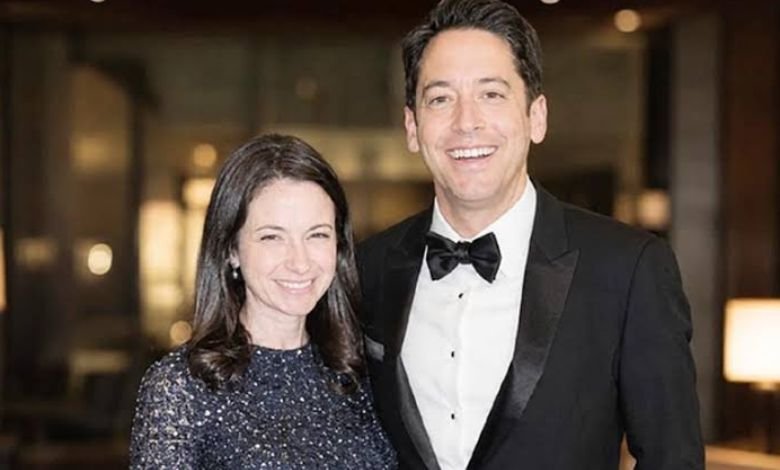
Alissa Mahler has an academic background in psychology and is married to political commentator Michael J. Knowles. The couple married in 2018. Her scholarly work appears under both Alissa Mahler and Alissa Rose Knowles, connecting her earlier publications with the surname used in her doctoral dissertation.
Her research examines adolescent development, future expectations and behavior among young people involved in the justice system. These subjects provide the central focus of her professional biography. They also offer a substantial account of her work beyond her connection to her husband’s media career.
A fact-based Alissa Mahler biography therefore covers two distinct areas: her education and research contributions, and her marriage to Knowles. University records and academic publications establish the educational and professional milestones discussed below.
Alissa Mahler Profile Summary Table
| Field | Details |
|---|---|
| Name | Alissa Mahler |
| Name in doctoral records | Alissa Rose Knowles |
| Professional background | Psychological and developmental research |
| Spouse | Michael J. Knowles |
| Marriage year | 2018 |
| Undergraduate institution | University of Maryland, College Park |
| Undergraduate qualification | B.A., Psychology and History, 2012 |
| Graduate institution | University of California, Irvine |
| Master’s qualification | M.A., Social Ecology, 2016 |
| Doctoral qualification | Ph.D., Psychological Science, 2019 |
| Research subjects | Adolescent development, future expectations, delinquency and juvenile justice |
Alissa Mahler Early Life and Background
Mahler’s educational history provides a clear starting point for understanding her background. She completed a bachelor’s degree at the University of Maryland, College Park, in 2012, with a double major in psychology and history. Her academic record lists graduation with cum laude honors.
She continued her education at the University of California, Irvine, where her graduate studies developed a more specific focus on adolescence and behavior. Her master’s thesis, completed in 2016 for an M.A. in Social Ecology, examined expectations for future success among adolescents following a first arrest.
The project considered how young people viewed their prospects and how those expectations related to subsequent behavior. It established a research direction that connected psychological development with the circumstances of youth involved in the legal system. Elizabeth Cauffman chaired her thesis committee.
Mahler later completed doctoral work in Psychological Science in 2019. Her dissertation was submitted under the name Alissa Rose Knowles, and its accompanying curriculum vitae states that her surname changed from Mahler to Knowles in 2018.
Also Read: Charles Donald Fegert Biography: Career and Marriage to Barbara Eden
Alissa Mahler Career and Professional Journey
Mahler’s early research experience included a postbaccalaureate fellowship at the National Institute of Child Health and Human Development from 2012 to 2014. She subsequently worked as a graduate researcher at UC Irvine. These appointments belong to her academic training history and should not be treated as statements about her present employment.
Her published research addresses specific questions about adolescent decision-making. One example is the 2017 study “Aspirations, Expectations and Delinquency: The Moderating Effect of Impulse Control,” published in the Journal of Youth and Adolescence. Mahler was its first-listed author, working with Cortney Simmons, Paul J. Frick, Laurence Steinberg and Elizabeth Cauffman.
The study distinguished aspirations from expectations. Aspirations concerned the importance adolescents placed on achieving their goals, while expectations concerned how likely they believed success would be. This distinction allowed the researchers to examine whether wanting a particular future and anticipating it had different relationships with offending.
Using a sample of 1,117 adolescent males following their first arrest, the researchers also examined impulse control. Their findings suggested that aspirations were associated with delinquency differently depending on a young person’s ability to control impulses. The study connected future goals with the capacity to consider those goals when making immediate choices.
A related article, “Expecting the Unexpected? Expectations for Future Success Among Adolescent First-Time Offenders,” appeared in Child Development in 2018. Mahler and her collaborators examined 1,165 adolescents over three years following a first arrest.
That analysis considered a relationship operating in both directions: expectations could be associated with later behavior, and changes in behavior could be associated with later expectations. More positive expectations were linked with reduced offending and improved grades; those improvements were also associated with higher expectations.
The authors suggested that helping adolescents obtain the tools needed to achieve their goals could be relevant to improving their outlook. This gives the research a practical dimension while preserving its scope: it examined patterns within a particular study population rather than establishing a universal explanation for adolescent behavior.
Alissa Mahler Major Achievements and Recognition
Mahler’s academic honors include Phi Beta Kappa membership in 2012 and a junior scientist fellowship from the American Psychological Association of Graduate Students and Psi Chi in 2014. These recognitions form part of her educational and research record.
Her contribution to “How Developmental Science Influences Juvenile Justice Reform,” published in the UC Irvine Law Review in 2018, extended her work into the relationship between psychology and legal policy. The article was co-authored with Elizabeth Cauffman, Adam Fine and Cortney Simmons, with equal contributions acknowledged.
The review examined why adolescent development matters when considering responsibility, punishment and treatment within the justice system. It discussed the continuing development of impulse regulation, resistance to peer influence and the ability to consider longer-term consequences.
It also examined the use of developmental research in legal decisions and identified questions concerning transfer to adult court and solitary confinement. The publication demonstrates participation in an interdisciplinary discussion; it does not establish that Mahler personally directed legal reforms or court decisions.
Her doctoral dissertation, “A Longitudinal Examination of the Relation between Future Expectations and Crime,” represents another major academic milestone. Together, her graduate research and publications show a sustained focus on how young people’s outlook and developing abilities relate to behavior.
Alissa Mahler FAQ Section
Who is Alissa Mahler?
Alissa Mahler is a psychology researcher whose academic work examines adolescence, future expectations and juvenile offending. She is also the wife of Michael J. Knowles.
Who is Alissa Mahler’s husband?
Her husband is Michael J. Knowles, a political commentator, author and media host. Their marriage is a separate part of her biography from her academic publications.
When did Alissa Mahler marry Michael Knowles?
Mahler and Knowles married in 2018. Her academic curriculum vitae also records the change of her surname from Mahler to Knowles during that year.
Where did Alissa Mahler study?
She attended the University of Maryland, College Park, for undergraduate studies and UC Irvine for graduate education. Her qualifications span psychology, history, social ecology and psychological science.
What does Alissa Mahler’s research focus on?
Her research includes adolescents’ goals, expectations, impulse control and offending behavior. Her co-authored publications also address how developmental science can inform discussions about juvenile justice.
Alissa Mahler Conclusion
Alissa Mahler’s biography includes a progression from undergraduate study to advanced psychological research. Her academic contributions examine questions about adolescent development that have relevance to education and the justice system.
Her marriage to Michael Knowles explains another source of interest in her life. Considering that relationship alongside her scholarly work produces a balanced account grounded in identifiable educational milestones and published research.





One Comment