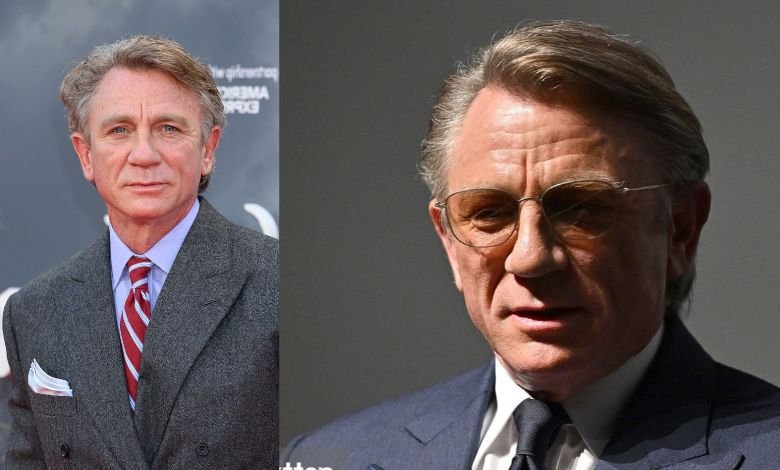
Daniel Craig Costner, known as Dan Costner, is a businessman and the older brother of actor and filmmaker Kevin Costner. He co-owned Costner Industries Nevada Corporation, a company that developed and manufactured equipment for separating liquids. Kevin told a U.S. House subcommittee in 2010 that Dan went on to run the company after it acquired technology from the U.S. Department of Energy.
The company’s best-known application was oil recovery. Its equipment grew out of federal laboratory research, and the underlying technology later reached the Gulf of Mexico through Ocean Therapy Solutions during the Deepwater Horizon response. Years before that spill, the Nevada business was already selling centrifuges for industrial uses and had supplied an oil separator to a federal testing facility in New Jersey.
Table of Contents
Daniel Craig Costner’s Age and Family Background
Daniel Craig Costner was born in November 1950 and turns 76 in November 2026. His parents were Sharon Costner and William Costner, who was also known as Bill. Daniel was the eldest of their three sons. His brothers were Mark Douglas Costner, who died in infancy in 1953, and Kevin Costner, who was born in January 1955.
Sharon, whose maiden name was Tedrick, worked in welfare services. William worked as an electrician and later became a utility executive at Southern California Edison. Their occupations provide some context for the household in which the brothers grew up. The available accounts give a fuller picture of Daniel’s adult business career than of his schooling or first jobs, so the most detailed part of his biography begins with the Nevada company.
Kevin became known for his work as an actor, director and producer. At the 1991 Academy Awards, he won the directing award for Dances With Wolves and shared the best picture award with fellow producer Jim Wilson. Two years after that ceremony, the company he owned with Dan was established. The brothers’ work together is documented in environmental agency records and business histories as well as in Kevin’s interviews.
Daniel Craig Costner and Costner Industries Nevada Corporation
Costner Industries Nevada Corporation, commonly called CINC, was established in 1993. A January 2000 bulletin from the U.S. Environmental Protection Agency identified Dan and Kevin Costner as its owners. The company operated in Carson City, Nevada, where it manufactured centrifuges for separating liquids. Kevin’s written statement to Congress gives a more specific account of Dan’s role by identifying him as the person who ran the business.
Interest in oil-spill technology followed the 1989 Exxon Valdez disaster in Alaska. Kevin described the spill as a reason he committed money to environmental technology. The brothers’ company took up a method from a Department of Energy laboratory in Idaho that had been developed for other liquid-separation work. Adapting it for oil recovery meant finding a way to handle much larger volumes than the research prototype could process.
David H. Meikrantz, the scientist behind the original patented method, joined Costner Industries as its director of technology. In a 2010 CNN interview, Kevin credited Meikrantz with developing the machinery and said Dan helped him develop it through the company. The accounts establish distinct responsibilities. Meikrantz brought the original technical work, Kevin supplied financial backing and promoted the project, and Dan helped take the technology to market as an owner and manager.
Dan also spoke about the venture for Clifford M. Gross and Joseph P. Allen’s 2003 book Technology Transfer for Entrepreneurs. He described the agreement with the government laboratory as an efficient way for the company to bring a product to market. He also pointed to improvements made after the transfer and to additional patents. His comments describe a business that continued to refine its equipment after gaining access to the original research.
How the Oil-Water Separators Worked
A centrifuge separates materials by spinning them. In an oil-water separator of the kind CINC developed, water generally moves toward the outside of the spinning chamber because it is denser than oil. The oil collects closer to the center. Separate outlets allow the two streams to leave the chamber independently, so recovered oil can be collected and the remaining water can be handled according to the needs of the operation.
The underlying method appears in U.S. Patent 4,959,158, issued in 1990 with Meikrantz named as the inventor. It describes feeding a liquid mixture into a spinning rotor and separating its components according to density. The Department of Energy’s account dates the commercial licensing of the technology to 1993. Those dates place the laboratory invention before the development work undertaken by the Costners’ company.
One later patent shows the kind of problem CINC had to solve to make the equipment practical. Solids suspended in liquid could build up inside the rotor, and removing the rotor for cleaning took the separator out of service. A patent granted in 1999 to inventors Lawrence L. Macaluso and David H. Meikrantz, and assigned to Costner Industries Nevada, described a system that could wash the rotor internally after processing stopped. Maintenance could then take place without dismantling the separator.
The company also produced machines in several sizes. Kevin’s congressional statement described five commercial units, with processing capacities ranging from about half a gallon to 200 gallons per minute. A manufacturer could use a smaller model for a lower-volume process, while a high-capacity unit could take a much larger feed. The range was a result of scaling the equipment for different customers and applications.
Daniel Craig Costner’s Business Beyond Oil Spills
By the time Gross and Allen published their book in 2003, they described CINC as having placed 450 units in 30 countries. They identified pharmaceutical manufacturing, mining and food processing among its markets. The figures offer a period snapshot of the company during Dan’s association with it. They also show that customers were using its equipment well before the technology attracted national attention during the Gulf spill.
The range of buyers reflected a broader use for liquid-to-liquid centrifuges. In industrial production, companies can use this class of machinery for separation, extraction and washing. Extraction moves a desired substance into another liquid so it can be collected. Washing can remove unwanted substances from a product. In each case, separating the two liquids is one stage in a larger manufacturing process.
One documented use was at Ohmsett, the national oil-spill response test facility in Leonardo, New Jersey. In January 2000, the EPA described a CINC V-10 separator as the main component of a new oil purification system at the site. Ohmsett used oil in controlled tests of marine response equipment, and the system helped the facility recover and reuse the oil from those exercises.
Ohmsett’s installation illustrates how the company could serve buyers between emergencies. A testing facility runs repeated exercises and needs to prepare the tank and recover materials after each one. In that setting, the separator had an ongoing job within the facility’s operations. For CINC, it was an example of an oil-related application with a regular purpose and a defined customer.
Daniel Craig Costner’s Company and Early Spill Response Trials
Costner Industries pursued opportunities to test its equipment at sea while it built an industrial customer base. In his congressional statement, Kevin said CINC approached the U.S. Coast Guard in 1994 to learn what requirements the equipment would have to meet. The company also held discussions with the Marine Spill Response Corporation and demonstrated its equipment to people working in government and industry.
In 1995, CINC ran sea trials of its larger V-20 separator with Buccaneer Marine, whose crews provided standby oil-recovery services off California. The trial put the machinery aboard a vessel in moving water. A test on a boat addressed practical questions about working on a rolling platform that a stationary installation could leave open. Kevin also listed a later demonstration in Monterey Harbor for California officials and the Coast Guard.
Adoption depended in part on what would happen to the water after separation. Water that looks clear can still contain residual oil, and the acceptable concentration depends on where the equipment operates and how the water will be handled. Kevin’s written testimony identified water purity as a hurdle for some uses. UCLA later reported that engineer Eric Hoek and his team evaluated the technology and improved its separation performance in laboratory work.
The original company also changed hands before the Deepwater Horizon spill. UPI and the Nevada news outlet Carson Now dated the sale of CINC Industries to 2004. By 2010, UCLA described the Carson City manufacturer as producing the centrifuges and identified Ocean Therapy Solutions as the company formed to market and deploy them for oil cleanup in the Gulf. That ownership and operating history helps explain why both names appear in accounts of the same technology.
The Costner Centrifuge in the Deepwater Horizon Response
The Deepwater Horizon drilling rig exploded on April 20, 2010. Eleven workers died, and oil flowed from the damaged well for 87 days. As part of the cleanup, response teams used skimmers to gather oily water from the surface. The centrifuges could process that collected mixture, giving crews a way to separate its oil and water after skimming.
Testing progressed from samples supplied by BP onshore to trials in Gulf waters. Trade publication Hydro International reported in early June that Ocean Therapy Solutions was making adjustments for oil that had changed consistency after exposure to weather and dispersants. Conditions at sea shaped the deployment plan as well. The company fitted machines to barges and prepared to test them in both deeper and shallower water.
On June 9, Kevin testified before the House Subcommittee on Energy and Environment about oil-spill cleanup technology. The hearing included researchers and agency officials as well as companies offering equipment. Kevin appeared as a partner in Ocean Therapy Solutions and WestPac Resources. His testimony placed the centrifuge in the longer history of the Nevada business and put Dan’s management role into the congressional record.
BP announced an order for 32 machines from Ocean Therapy Solutions in June. The Associated Press later reported that an early barge carried three of the separators into the Gulf. Skimmer vessels were to deliver the oily mixture to the barge, where the machines could process it. The order and the early deployment were separate milestones, and news reports at the time described additional machines as still being manufactured or prepared for service.
In late August, UCLA reported that Ocean Therapy Solutions had deployed 21 centrifuge systems on six recovery vessels. Its account described a broader recovery system that paired the centrifuges with floating barriers, skimmers and membrane technology. The barriers and skimmers helped crews collect oily water, while the centrifuges and membranes handled treatment after collection. The deployment figure records the scale of the operation at the time UCLA published its account.
By then, the equipment had traveled through several stages of development. The federal laboratory established the separation method. The Nevada company turned it into a line of products. For the Gulf response, a separate company and its technical partners fitted the equipment into a system that could operate on recovery vessels. Dan Costner’s business career is tied most directly to the manufacturing stage, when the technology found buyers in several industries.
Daniel Craig Costner Biography FAQs
How old is Daniel Craig Costner?
He was born in November 1950 and turns 76 in November 2026. The month and year are the most precise birth details used in this profile.
What business did Daniel Craig Costner run?
He ran Costner Industries Nevada Corporation, the Carson City company that manufactured industrial centrifuges. A 2000 EPA bulletin identifies him and Kevin Costner as its owners at the time.
Did Daniel Craig Costner invent the oil-water centrifuge?
The original patent for the separation method names David H. Meikrantz as the inventor. Daniel’s documented role was to help develop and commercialize the technology through the business he managed.
Who are Daniel Craig Costner’s parents and brothers?
His parents were Sharon and William Costner. His brothers were Mark Douglas Costner and Kevin Costner. Mark died in infancy, and Kevin went on to a career in film.
Which company supplied the centrifuges to BP?
BP placed the 2010 order with Ocean Therapy Solutions. The machines used technology developed for commercial use by Costner Industries Nevada Corporation.
Sources for the Daniel Craig Costner Biography
- U.S. Environmental Protection Agency, Oil Spill Program Update, Vol. 3, No. 2, January 2000.
- U.S. House Subcommittee on Energy and Environment, Deluge of Oil Highlights Research and Technology Needs for Effective Cleanup of Oil Spills, June 9, 2010, including Kevin Costner’s written statement.
- Clifford M. Gross and Joseph P. Allen, Technology Transfer for Entrepreneurs, Praeger, 2003, pp. 1–2.
- U.S. patents 4,959,158 and 5,908,376, and the Department of Energy’s DOE Pulse account of the 1993 licensing.
- UCLA Samueli School of Engineering, Engineering Team Optimizes New Device to Remove Oil from Gulf Waters, August 26, 2010.
- CNN, Anderson Cooper 360° interview with Kevin Costner, June 18, 2010.
- NOAA, NCEI Records Response to Historic Gulf Oil Spill. Contemporary coverage by the Associated Press, ABC News, Hydro International, UPI and Carson Now.
- Academy of Motion Picture Arts and Sciences, 63rd Academy Awards records. Lynwood Education Foundation, Kevin Costner profile. NNDB, Costner family entries. Birth month and year supplied in the article brief.





One Comment