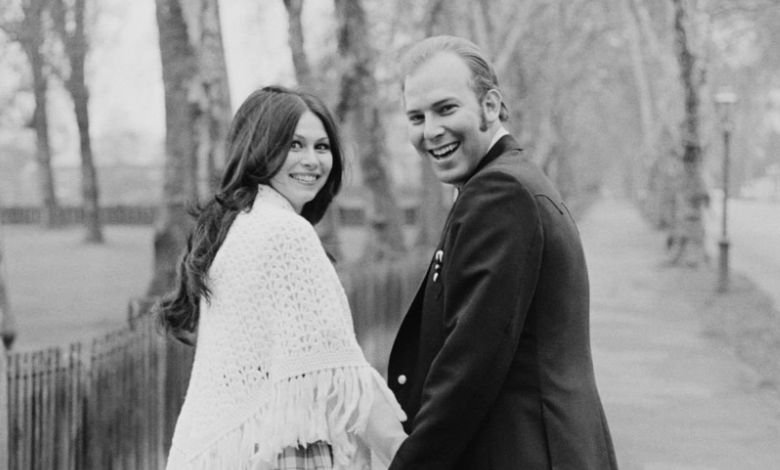
Gwen Yeargain was married to country singer Hank Williams Jr. from 1971 to 1977. Their son, Shelton Hank Williams, performs as Hank Williams III. A Nashville wedding announcement identified Yeargain as a model, and interviews with her son offer an account of the years she spent raising him after the marriage ended.
The most specific accounts of Yeargain’s life come from different points in time. The music trade paper Cash Box covered the wedding plans in 1971. An April press photograph placed the newly married couple in London. Decades later, Hank Williams III spoke about his upbringing to the Los Angeles Times and No Depression. Together, these accounts trace Yeargain’s place in the Williams family from her marriage to her son’s childhood and later recollections.
Table of Contents
Gwen Yeargain Bio Table
| Field | Details |
|---|---|
| Name | Gwen Yeargain |
| Also known as | Gwen Williams |
| Occupation | Described as a model in a 1971 Cash Box wedding announcement |
| Former spouse | Hank Williams Jr. |
| Marriage years | 1971–1977 |
| Announced wedding date and venue | April 7, 1971, at First Presbyterian Church in Nashville, Tennessee |
| Son | Shelton Hank Williams, known professionally as Hank Williams III |
Gwen Yeargain’s Modeling Work and Early Biography
The April 10, 1971, issue of Cash Box introduced Yeargain as a model in a short item about her upcoming marriage. The description establishes how the music trade press identified her at the time. It gives her an occupation of her own in a story that otherwise concerns a wedding and the schedule of a touring country singer.
The announcement gives no agency name, campaign credits, or dates for her modeling work. The available accounts also leave her birth date, birthplace, and education uncertain. Nashville is the first setting in the wedding coverage, where the church ceremony was planned. That connection belongs to the chronology of her marriage.
The wedding notice identified Yeargain’s sister as the bride’s maid of honor. Her son would later mention an aunt on his mother’s side in an interview about the records he heard as a boy. The two accounts illuminate different family occasions, first a formal role at a wedding and later a relative’s place in a child’s everyday life.
Gwen Yeargain’s 1971 Wedding to Hank Williams Jr.
The wedding notice gave April 7, 1971, as the planned date for the ceremony at First Presbyterian Church in Nashville. It named Dr. Walter Courtney as the officiant and identified Buddy Lee, Williams’s personal manager, as best man. The report expected about 300 relatives and friends to attend. It also listed the Statler-Hilton Hotel as the planned site of the reception.
The account describes the arrangements in advance. A separate press photograph documents the couple shortly afterward. On April 12, 1971, a Daily Express photographer captured Yeargain and Williams together in London. The archive identifies her as his wife. The announcement and the photograph thus record two distinct points in the same week, from the Nashville wedding plans to the couple’s appearance in Britain.
London was part of Williams’s professional schedule that spring. A March issue of Cash Box had listed him for the third International Festival of Country Music at Wembley Pool. The wedding item described the London trip as a honeymoon timed around that engagement. The press photograph places Yeargain on the trip, while the festival listing explains why Williams was due in London in mid-April.
The Nashville report appeared in a trade publication that followed country records, television appearances, and bookings. That helps explain why it paired the wedding arrangements with news about the festival. For Yeargain, the report preserves concrete details about her occupation, the ceremony and the people expected to stand with the couple. The London photograph adds a dated record of the two together in the days after the wedding.
Gwen Yeargain’s Son, Shelton Hank Williams
Yeargain and Williams became parents in December 1972. Their son was born in Nashville on December 12 and was named Shelton Hank Williams. His professional name, Hank Williams III, reflects his place in a line of country performers that began with his paternal grandfather, Hank Williams, and continued with his father, Hank Williams Jr.
The names in the family can be confusing because the stage names use suffixes even though the three men had different given names. Hank Williams Jr. was born Randall Hank Williams. The third performer’s given name is Shelton, the name his family and friends used, according to his interview with No Depression. He has also recorded and performed under the shorter names Hank III and Hank3.
Their son’s birth falls between the wedding coverage and the later accounts of the divorce. He turned five in December 1977, the year the marriage ended. Interviews with him as an adult mainly describe the school years that followed, when his mother’s home and her side of the family were central to his recollections.
The older Hank Williams died in 1953, nearly two decades before Shelton was born. When the youngest performer later recorded songs associated with his grandfather, he drew on a catalog and a musical reputation that had survived across generations. His memories of Yeargain, by comparison, came from the people, places, and music he encountered directly while growing up.
Gwen Yeargain and Hank Williams Jr. During the 1970s
Williams entered the marriage with an established recording career. He had performed his father’s material from childhood, appeared at the Grand Ole Opry as a boy, and recorded for MGM. His recordings at the time included “All for the Love of Sunshine,” made with the Mike Curb Congregation. By the time of the wedding, he had spent years working in music and had a hit associated with his own recording career.
His sound changed during the marriage. The Country Music Hall of Fame and Museum traces that shift to the mid-1970s, when he began giving greater weight to blues and Southern rock. He moved from Nashville to Cullman, Alabama, in 1974. The music history follows Williams’s move and artistic development, while the accounts of Yeargain’s life draw primarily on the wedding coverage and her son’s later interviews.
In 1975, Williams survived a fall in the mountains of Montana. That year also saw the release of Hank Williams Jr. and Friends, an album he had recorded before the accident. The record blended country music with the blues and rock that were becoming more prominent in his work. As The New Yorker later recounted, his recovery interrupted his performing schedule, and he returned to the stage in 1976.
The sequence places the marriage alongside a career change that was underway before the accident. The London trip in 1971 came while Williams was working within the established country touring circuit. By the time the marriage ended, he had made a record that pointed toward a different phase of his career. The chronology gives context for the years of the marriage while leaving its private history to the available family accounts.
Gwen Yeargain’s Divorce and Family Life After 1977
The marriage ended in divorce in 1977, about six years after the wedding. The Los Angeles Times identifies Gwen Williams as Hank Williams Jr.’s former wife and Shelton’s mother in its 1999 profile of their son. The profile places the divorce in Shelton’s childhood and follows the family’s later movements through several states.
According to that profile, Yeargain remarried when Shelton was 11. They moved to Atlanta, spent time in North Carolina, and returned to Nashville when he was 15. The sequence marks a period of change in his schooling and home life. Nashville, the city where the wedding had been announced and where Shelton was born, became part of his life again as a teenager.
In his interview with No Depression, Shelton recalled that his stepfather worked at Charlotte Motor Speedway. He remembered being able to meet drivers and spend time around racing during the family’s years in North Carolina. The speedway appears in his account as part of the environment he knew as a teenager, alongside the records he listened to and the early jobs he took.
The Los Angeles Times profile also says Yeargain moved to California before her son finished high school. At the time of the interview, he described staying in touch with her mainly from a distance. That move belongs to the period covered by the profile. The account documents how their contact changed after his years of living with her.
Gwen Yeargain in Hank Williams III’s Childhood Recollections
Hank Williams III told No Depression that his mother did much of the work of raising him. He remembered a household with firm rules and regular church attendance. He also recalled that Yeargain took low-paying jobs and that he began working as a teenager. These details come from the adult son’s account of their home life.
Among the music he associated with his mother, Elvis Presley stood out. In the same interview, he described an aunt on Yeargain’s side of the family who introduced him to KISS by giving him albums when he was nine. He also remembered hearing ZZ Top and Ted Nugent through her. The records provide a concrete example of how his mother’s household and his extended family exposed him to music beyond the country catalog associated with his surname.
The two relatives occupied different places in that story. He remembered his mother’s taste through the Elvis records she played, while his aunt’s gifts gave him early access to the rock that appealed to him. Those are his recollections of music in the family. His later decision to play in punk and heavy bands belongs to his own professional history.
The interview also records how he felt about Yeargain as an adult. He described her as supportive and caring through difficult periods in his life. His account includes both the rules he chafed against as a boy and the support he appreciated later. That combination gives a fuller picture of their relationship than the wedding coverage, which recorded her occupation and the ceremony but had little reason to follow the family into the years that followed.
Gwen Yeargain’s Family Connection to Country Music
In 1996, the album Three Hanks: Men with Broken Hearts brought together recordings associated with three generations of the Williams family. The project used earlier recordings of Hank Williams alongside contributions from his son and grandson. Because the grandfather had died before Shelton was born, the collaboration took place through recording and production across different eras.
The album helps explain the prominence of the Williams name at the beginning of Shelton’s recording career. It introduced him to country listeners in an explicitly family-centered project. The interviews that followed his solo work placed Yeargain in a different part of that history, through his descriptions of the years he lived with her.
His first solo album, Risin’ Outlaw, appeared in 1999. He followed it with Lovesick, Broke & Driftin’ in 2002 and Straight to Hell in 2006. The titles mark the development of his own catalog after the three-generation project. His country recordings featured honky-tonk instrumentation, while his other work included heavier music and a stint playing bass with Superjoint Ritual.
Shelton also revisited his grandfather’s material on Timeless, a 2001 tribute album, where he recorded “I’m a Long Gone Daddy.” The tribute gave him a chance to interpret a song on his own after the earlier project had placed his voice alongside the other two Williams performers. By then, he had also released a solo album under the Hank Williams III name, giving listeners more than one way to hear him in relation to the family catalog.
The stylistic range makes the childhood interviews particularly relevant. When Hank III described the music he grew up hearing, he named hard-rock acts as well as recalling the Elvis records his mother played. Those details locate some of his earliest listening experiences on Yeargain’s side of the family. They also help explain why profiles of the musician returned to her when tracing his upbringing, even though the Williams name supplied the most obvious connection to country music.
Frequently Asked Questions About Gwen Yeargain
What was Gwen Yeargain’s occupation?
A 1971 wedding announcement in Cash Box described her as a model. The item provides a contemporary reference to her occupation. It gives no further details about the length or scope of her modeling work.
Where did Gwen Yeargain and Hank Williams Jr. plan to marry?
Their wedding notice named First Presbyterian Church in Nashville and gave April 7, 1971, as the date. It listed a hotel reception in the city and described a London trip timed around Williams’s festival appearance.
When did Gwen Yeargain and Hank Williams Jr. divorce?
Their marriage ended in 1977. It had begun in 1971 and lasted approximately six years. Their son Shelton was still a young child when the marriage ended.
What is the real name of Gwen Yeargain’s son?
His given name is Shelton Hank Williams. He is known professionally as Hank Williams III, Hank III, or Hank3. His stage name connects him with his father and paternal grandfather.
Is Gwen Yeargain’s age known?
The wedding coverage and later family interviews give dates for events in her life. Those accounts do not establish her date of birth, so they cannot support a reliable age.
Sources for the Gwen Yeargain Biography
- Cash Box, March 6 and April 10, 1971 issues. Festival booking, wedding announcement, and the contemporary reference to Yeargain’s modeling work.
- Daily Express photograph, April 12, 1971, in the Getty Images Hulton Archive. Dated photograph of the couple in London.
- People, October 20, 2024. Marriage years.
- Los Angeles Times, “Son of a Gun, Take III,” November 21, 1999. Family chronology after the divorce.
- No Depression, “Hank Williams III — The Third Man.” Interview about his upbringing and his memories of his mother.
- Country Music Hall of Fame and Museum, Hank Williams and Hank Williams Jr. biographies. Career and family context. A Tennessee General Assembly resolution honoring Hank Williams Jr. also documents his move to Alabama and the 1975 accident.
- The New Yorker, “The Awkward, Enduring Influence of Hank Williams, Jr.” Return to performing in 1976.
- AllMusic and Apple Music, Hank Williams III artist and album entries. Birth date, recording history, and release chronology.





One Comment