
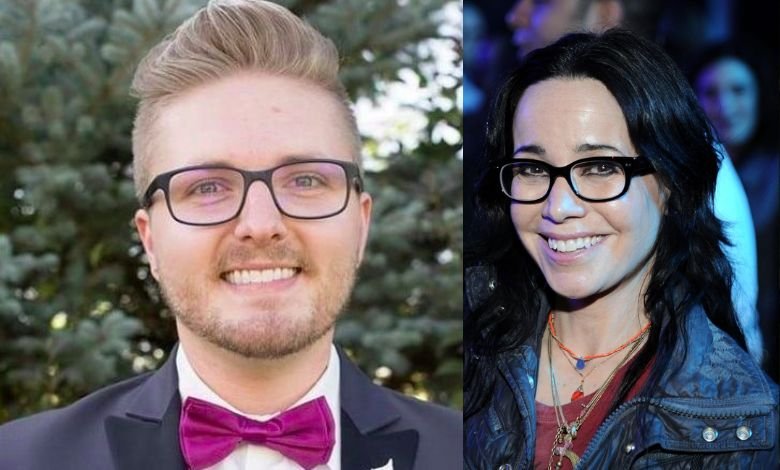
Brody Tate is identified as Janeane Garofalo’s husband in entertainment coverage, including a 2022 Us Weekly article that places their marriage in 2015. Garofalo is an American actress, stand-up comedian, and writer whose career includes film and television. Her recognition makes the identity and background of her spouse a natural subject of reader interest.
However, writing an accurate Brody Tate biography requires an important distinction. University records also document an education professional named Brody C. Tate whose work addresses queer identity, rural education, curriculum, and belonging. The sources examined do not establish that this academic is the same person identified as Garofalo’s husband. Those two sets of information therefore cannot be combined into a single personal history.
This article explains the documented marriage reference and examines the academic records separately. That approach provides context for the research interests associated with the name while avoiding unsupported claims about Garofalo’s spouse. It also distinguishes established professional information from details such as age, childhood, family relationships, and finances that cannot be responsibly assigned to him.
Also Read: Dorothée Lepère Biography: François-Henri Pinault’s Ex-Wife
Brody Tate Profile Summary Table
A profile summary should distinguish between a supported identification and information belonging to a potentially different person. In this case, the marriage reference comes from entertainment coverage, while the educational and research details come from university and scholarly records.
The following table preserves that distinction. Academic information appears as a separate record under the same name rather than as an established description of Janeane Garofalo’s husband.
| Profile Field | Supported Information |
|---|---|
| Name used in marriage coverage | Brody Tate |
| Connection to Janeane Garofalo | Identified as her husband by Us Weekly |
| Marriage year | 2015, according to that publication |
| Spouse’s profession | Actress, comedian, and writer |
| Date of birth and age | Not established by the sources examined |
| Birthplace and childhood | Not established for Garofalo’s spouse |
| Parents and siblings | Not established for Garofalo’s spouse |
| Career of Garofalo’s spouse | Not established by the sources examined |
| Separate academic record | Brody C. Tate, an education professional and researcher |
| Academic research themes | Queer identity, rural education, critical reflection, curriculum, and belonging |
| Identity connection | The academic records have not been linked conclusively to Garofalo’s spouse |
The table does not include estimated wealth, assumed nationality, or claims about children. Such details require evidence specific to the individual, rather than information repeated across biographies without a clear original source.
Brody Tate’s Early Life and Background
The sources examined do not establish a reliable account of the childhood of the Brody Tate identified as Janeane Garofalo’s husband. His birth date, hometown, parents, and school history cannot be stated here as settled facts. Without a dependable birth date, an exact age would also be an unsupported addition.
This matters because early-life sections often become the starting point for further assumptions. A supposed birthplace may lead to claims about nationality, upbringing, or family circumstances. Similarly, an estimated age can create an inaccurate timeline of education and employment. A factual biography should avoid building a personal history from those assumptions.
The academic background associated with Brody C. Tate is better documented. Loyola University Chicago has identified him as a doctoral candidate in its Doctor of Education program in Curriculum, Culture, and Communities. Its research presentation page connects his scholarship with questions about identity, education, reflection, and course design. These records describe the academic’s educational setting; they do not establish the education of Garofalo’s husband.
Research interests also need careful interpretation. Studying rural education does not, by itself, establish where a researcher grew up. Work concerning identity and belonging likewise should not be used to infer private relationships or personal experiences. Those subjects explain the focus of scholarship, while biographical claims require their own supporting evidence.
For the marriage connection, Us Weekly provides a straightforward statement: Garofalo married Brody Tate in 2015. That establishes what the publication says, but its brief account does not provide a detailed relationship history. It does not support additional descriptions of how they met, who attended their wedding, or how they organize their family life.
Brody Tate’s Career and Professional Journey
A dependable career history for Garofalo’s spouse has not been established in the sources examined. Nevertheless, institutional records provide useful information about the education professional named Brody Tate. The following professional account concerns that academic record and should be read within that scope.
Loyola University Chicago’s history department previously identified Brody Tate as a learning portfolio manager. A university event announcement described a workshop in which he would help graduate students use Digication, an electronic portfolio platform. This provides a concrete example of work involving educational technology and the presentation of student learning.
Learning portfolios give students a way to organize examples of their work and reflect on their development. They may bring together coursework, projects, internships, and other educational experiences. The documented workshop therefore places Tate in a practical university setting concerned with helping students use a learning tool, rather than merely listing a job title without context.
Another Loyola record identifies Tate alongside Dr. Cynthia Stewart at a January 2020 teaching and learning event. Their session addressed creative assessment of student learning through portfolios. It documents participation in a conversation about how educators evaluate learning and how students demonstrate what they have learned.
The University of Chicago also documented an online program management role under the name Brody Tate. A May 2025 university article identified him as the Online Program Manager for its Master of Science in Applied Data Science program. Because that source describes a role at a particular time, it should not automatically be treated as a statement of his current employment.
That article also recorded his participation in a roundtable at the 2025 UPCEA Conference with colleagues Emma Kerr-Ketchum and Taylor Alexander. The discussion concerned ethical responsibility in data science education, including how data is collected, consumed, and interpreted. It provides evidence of professional participation in educational questions surrounding data and emerging technology.
A related strand of the academic record concerns queer students from rural backgrounds. Scholarly listings identify Tate as a co-author of a 2024 chapter examining the challenges and resilience of those students in higher education. The chapter’s abstract covers rural communities, school environments, student development, and implications for educational practice.
These subjects help explain the relationship between rurality and belonging. Students enter universities with experiences shaped partly by their communities, schools, and social environments. Research in this area considers how institutions understand those experiences and support students without treating rural backgrounds as a single, uniform category.
Taken together, the institutional records describe work involving student learning, educational technology, graduate programs, and research. They offer a more precise professional account than broad labels such as “businessman” or “celebrity husband.” They still do not supply the missing evidence needed to connect that career to Garofalo’s spouse.
Brody Tate’s Major Achievements and Recognition
Loyola University Chicago’s 2025 School of Education awards page lists Brody Tate as a recipient of a Research Excellence Award among its student awardees. This is a specific institutional recognition with an identifiable awarding body and year. It supports a measured statement about academic recognition without requiring claims of national prominence or exceptional influence.
The university’s research repository also lists a 2025 dissertation by Brody C. Tate titled “Mirrors and Windows: Exploring Queer Identity Representation in Graduate Curriculum.” The title establishes the subject of that doctoral work: how queer identity is represented within graduate-level educational content. It should not be expanded into detailed claims about findings without examining the dissertation itself.
The distinction between a dissertation’s topic and its demonstrated conclusions is important. A title can show what a researcher investigated, but it cannot independently establish the methods used, the experiences of every participant, or the effectiveness of proposed changes. Accurate coverage recognizes the project without attributing conclusions that the available record does not show.
Publication listings provide another part of the academic record. Alongside the chapter on supporting rural queer students, they identify work concerning the relationship between rural identity and college experience, as well as queer joy in nature. These contributions indicate recurring scholarly themes rather than unrelated research interests.
Academic collaboration should also be represented accurately. A co-authored chapter is a shared contribution, and its ideas should not be credited entirely to one contributor. Likewise, a university award recognizes achievement within a defined setting; it does not automatically establish a broader reputation beyond that setting.
No comparable professional award or career achievement has been established here for the individual identified as Garofalo’s husband. The academic accomplishments remain relevant to understanding search results for the name, but they cannot be transferred to the spouse’s biography without confirming the identity connection.
Brody Tate FAQ
Who is Brody Tate?
Brody Tate is the name Us Weekly gives for Janeane Garofalo’s husband. Separately, university and scholarly records document an education professional named Brody C. Tate. The sources examined do not conclusively connect those identities.
When did Brody Tate marry Janeane Garofalo?
Us Weekly states that Garofalo married Brody Tate in 2015. Its account does not provide a detailed description of their wedding or relationship history, so those details should not be added without further evidence.
What does Brody Tate do professionally?
Institutional sources document an education professional with this name working in learning portfolios and online graduate program management. However, those roles have not been established as belonging to Garofalo’s husband.
What are Brody Tate’s research interests?
The academic records associate Brody C. Tate with queer identity development, rural education, critical reflection, and curriculum development. Related publications also address belonging and the experiences of queer students from rural communities.
How old is Brody Tate?
A dependable birth date for the Brody Tate identified as Garofalo’s husband has not been established by the sources examined. An exact age would therefore be speculative.
Conclusion: Understanding Brody Tate’s Biography
The clearest supported marriage reference identifies Brody Tate as Janeane Garofalo’s husband and places their wedding year in 2015. That account provides a basis for discussing the connection, but it does not establish a complete personal biography or professional history.
Separate university records document an education professional named Brody C. Tate whose work includes learning portfolios, online graduate education, research, and academic collaboration. Loyola also records a 2025 research award and a dissertation concerning queer identity representation in graduate curriculum.
An accurate Brody Tate biography must preserve the boundary between those records. Until evidence establishes that they concern the same person, the academic career should remain a separate account. This keeps the article useful while protecting its central purpose: presenting supported facts without turning an uncertain identity connection into an established life story.


One Comment